
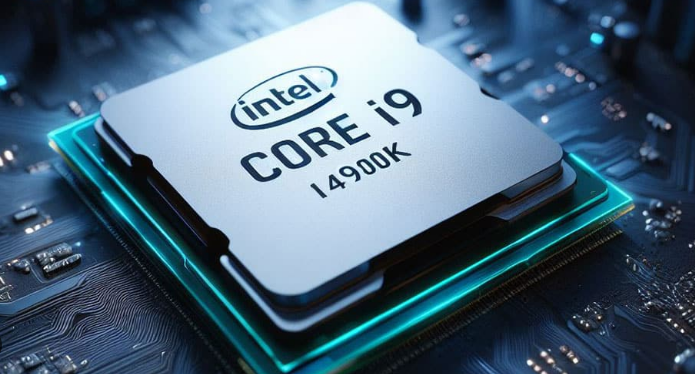
Most interesting Introduction for the generations and 14th types of processor for computers.
The evolution of computers has been one of the most significant technological advancements in human history. From massive room-sized machines to ultra-portable, high-performance devices, computers have undergone remarkable transformations over the decades. These changes are categorized into different “generations” each defined by major technological breakthroughs.
This article explores all the generations of computers from the first to the fourteenth detailing their key characteristics, advancements and impacts on society.
Table of Contents
What Are Computer Generations? 14th types of processor
The term “generation” in computing refers to distinct phases in the development of computers characterized by major technological breakthroughs. Each generation introduces new hardware components, programming capabilities and performance improvements over the previous one.
The classification into generations helps us track the rapid advancements in computing power, size, cost and efficiency. There are fourteen main generations of computers each defined by a key technological innovation:
1. First Generation (1940-1956): Vacuum Tubes
The first generation of computers relied on vacuum tubes for circuitry and magnetic drums for memory. These machines were enormous, consumed vast amounts of electricity, and generated significant heat.

Key Features:
- Used machine language (binary code) for programming.
- Limited to basic calculations and military/scientific applications.
- Examples: ENIAC, UNIVAC I, EDVAC.
Impact:
- Laid the foundation for digital computing.
- Enabled complex calculations for scientific research and defence.
2. Second Generation (1956-1963): Transistors
The invention of the transistor replaced vacuum tubes making computers smaller, faster, and more energy-efficient.
Key Features:
- Magnetic core memory was introduced.
- Assembly language and early high-level languages (FORTRAN, COBOL) emerged.
- Examples: IBM 1401, IBM 7090, UNIVAC 1107.
Impact:
- Made computers more accessible to businesses.
- Improved processing speed and reliability.
3. Third Generation (1964-1971): Integrated Circuits (ICs)
The development of Integrated Circuits (ICs) allowed thousands of transistors to be embedded on a single silicon chip.
Key Features:
- Smaller size, lower cost, and higher efficiency.
- Introduction of operating systems (OS).
- Examples: IBM System/360, PDP-8, Honeywell 6000.
Impact:
- Enabled time-sharing and multi-programming.
- Paved the way for personal computing.
4. Fourth Generation (1971-2010): Microprocessors
The microprocessor revolutionized computing by integrating the entire CPU onto a single chip.
Key Features:
- Personal Computers (PCs) became mainstream.
- Graphical User Interface (GUI) was introduced.
- Examples: Apple Macintosh, IBM PC, Intel 4004.
Impact:
- Computers became affordable for households.
Birth of the Internet and modern software industry.
5. Fifth Generation (2010-Present): Artificial Intelligence & Quantum Computing
This generation focuses on AI, machine learning and quantum computing.
Key Features:
- Natural Language Processing (NLP) and neural networks.
- Quantum computing for ultra-fast processing.
- Examples: IBM Watson, Google Quantum AI, OpenAI’s ChatGPT.
Impact:
- Automation in industries.
- Advanced robotics and smart assistants.
6. Sixth Generation (Emerging): Neuromorphic & Biocomputing
This upcoming generation mimics the human brain using neuromorphic chips.
Key Features:
- Brain-like processing for AI.
- Biodegradable electronics and DNA storage.
Impact:
- Sustainable computing.
- Medical breakthroughs via bio-compatible devices.
7. Seventh Generation (Future): Optical Computing
Uses light (photons) instead of electrons for processing.
Key Features:
- Ultra-fast data transfer.
- Zero heat dissipation.
Impact:
- Exascale computing (beyond supercomputers).
8. Eighth Generation (Beyond): Nanotechnology in Computing
Incorporates nanoscale materials for ultra-efficient computing.
Key Features:
- Molecular transistors.
- Self-healing circuits.
Impact:
- Medical nanobots.
- Unbreakable encryption.
9. Ninth Generation (Speculative): DNA & Biological Computing
Uses DNA molecules for data storage and processing. the generations of computers all evolution and features are here.
- Massive storage capacity (1 gram of DNA = 215 petabytes).
- Self-replicating machines.
Impact: Revolutionizing biotechnology.
10. Tenth Generation (Theoretical): Post-Quantum & 3D Stacked Chips
Focuses on 3D integrated circuits and quantum-resistant encryption. and the generations of computers.
Key Features:
- Layered processors for extreme efficiency.
- Un hackable networks.
Impact:
- Next-gen cybersecurity.
11. Eleventh Generation (Futuristic): Swarm Intelligence & AI Clusters
Decentralized AI swarms working in unison.
Key Features:
- Distributed AI networks.
- Self-learning algorithms.
Impact:
- Autonomous smart cities.
12. Twelfth Generation (Visionary): Conscious AI & Sentient Machines
Machines with self-awareness and emotional intelligence.
Key Features:
- Ethical AI frameworks.
- Human-like reasoning.
Impact:
- AI rights debates.
13. Thirteenth Generation (Sci-Fi Inspired): Holographic & Thought-Based Computing
Direct brain-computer interfaces (BCI).
Key Features:
- Mind-controlled devices.
- Holographic displays.
Impact:
- Telepathic communication.
14. Fourteenth Generation (Ultimate): Singularity & Beyond
The merging of humans and machines.
- Full AI-human integration.
- Immortality via digital consciousness.
Impact:
- Redefining humanity.
- For more information are here:


[…] 2: The Great Reboot (The Universal First […]