
Table of Contents
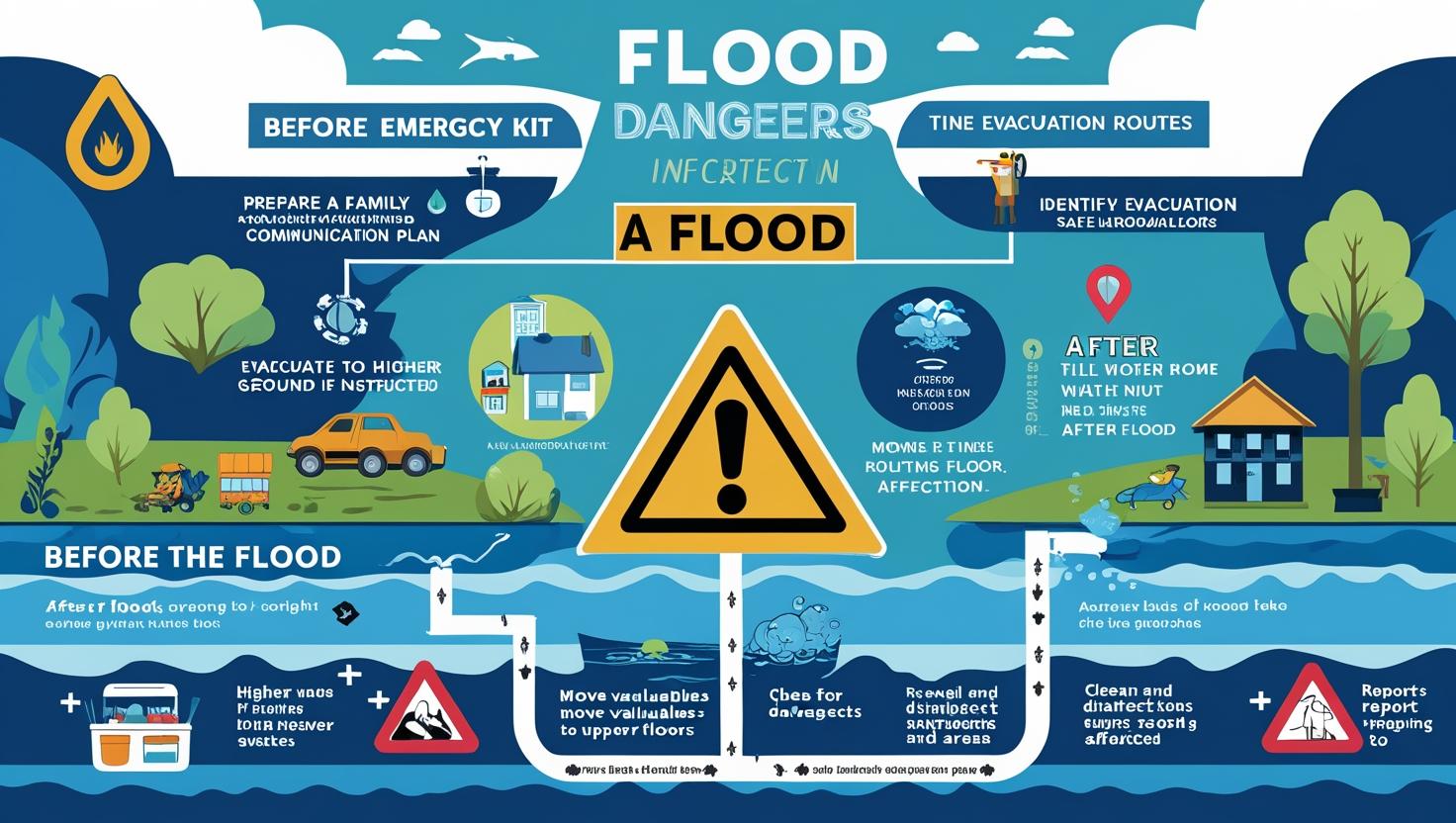
Before a Flood
- Stay Informed: Monitor weather alerts and flood warnings.
- Prepare an Emergency Kit: Include food, water, medicines, flashlights, batteries and important documents.
- Elevate Belongings: Move valuables and electrical appliances to higher floors.
- Know Evacuation Routes: Identify safe paths to higher ground.
- Protect Your Home: Use sandbags, seal basements and install check valves in plumbing.
- Charge Devices: Keep phones and power banks fully charged.
- Secure Insurance: Ensure flood insurance coverage if you’re in a high- risk area.

During a Flood
- Evacuate if Advised: Leave immediately if authorities issue an evacuation order.
- Avoid Walking/Driving in Floodwater: Just 6 inches of moving water can knock you down 12 inches can sweep away a car.
- Stay on High Ground: Move to the highest possible elevation.
- Turn Off Utilities: Shut off electricity, gas and water if safe to do so.
- Do Not Enter Flooded Areas: Hidden dangers (live wires, debris, sewage) may be present.
Listen to Authorities: Follow updates via radio or emergency alerts.
After a Flood
- Wait for Official Clearance – Return home only when authorities say it’s safe.
- Inspect for Damage – Check for structural damage, gas leaks or electrical hazards.
- Avoid Contaminated Water – Floodwater may carry diseases wear protective gear when cleaning.
- Document Damage – Take photos for insurance claims.
- Dispose of Contaminated Items – Discard spoiled food, soaked mattresses and damaged goods.
- Clean and Disinfect – Use bleach solutions to sanitize affected areas.
- Check Water Supply – Ensure drinking water is safe (boil if uncertain).
- Seek Assistance – Contact disaster relief agencies if needed.
Would you like additional details on any of these points? Stay safe!


