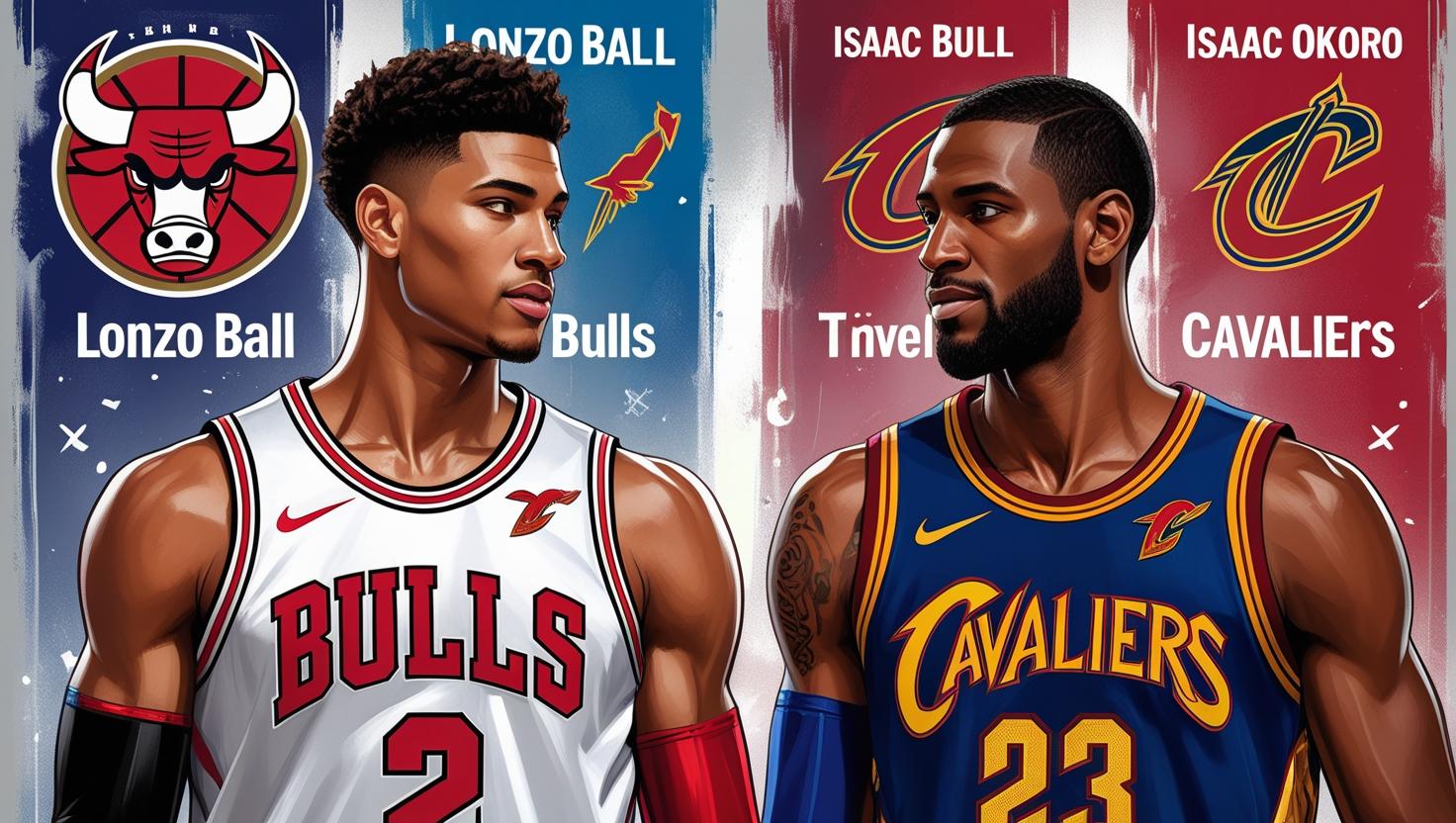
In a surprising move that could shake up both teams’ rosters the Chicago Bulls are reportedly trading guard Lonzo Ball to the Cleveland Cavaliers in exchange for young forward Isaac Okoro. This trade, first reported by ESPN’s Adrian Wojnarowski comes as the Bulls look to retool their roster while the Cavaliers seek a proven playmaker to bolster their backcourt.
Lonzo Ball, who has been sidelined for over two years due to a severe knee injury has been one of the biggest question marks in the NBA. Meanwhile Isaac Okoro a former No. 5 overall pick has shown flashes of defensive brilliance but has struggled with consistency on offense. This trade could be a win-win for both franchises but it also carries significant risks.
Below, we break down the details of the trade analyze its implications for both teams and explore how this move could shape their futures.
Table of Contents
Trade Details
According to sources, the proposed trade would involve:

Chicago Bulls receive: Isaac Okoro
Cleveland Cavaliers receive: Lonzo Ball
There are no additional draft picks or players reported to be involved in the deal at this time. However, given Ball’s injury history the Cavaliers may push for future protections or additional assets if the trade progresses.
Why the Bulls Are Making This Move
1. Moving On from Lonzo Ball’s Uncertain Future
Lonzo Ball last played in an NBA game on January 14, 2022. Since then, he has undergone multiple knee surgeries including a cartilage transplant which has cast serious doubt on whether he can return to his previous form. The Bulls have remained patient but with no clear timeline for his return they may be looking to cut their losses.
By trading Ball, the Bulls free up financial flexibility and acquire a young, athletic wing in Okoro who can contribute immediately.

2. Adding Défense and Youth with Isaac Okoro
Isaac Okoro, 23, is known for his elite perimeter Défense. While his offensive game is still developing, he fits the Bulls’ need for a versatile wing who can guard multiple positions. Chicago has struggled defensively in recent years and Okoro could help shore up that weakness.
Additionally, Okoro is still on his rookie contract giving the Bulls cost-controlled talent as they navigate future roster decisions.
2. Adding Défense and Youth with Isaac Okoro
Isaac Okoro, 23, is known for his elite perimeter Défense. While his offensive game is still developing, he fits the Bulls’ need for a versatile wing who can guard multiple positions. Chicago has struggled defensively in recent years and Okoro could help shore up that weakness.
Additionally, Okoro is still on his rookie contract giving the Bulls cost-controlled talent as they navigate future roster decisions.

3. Clearing Cap Space for Future Moves
Ball’s contract (owed $21.4 million in 2024-25) has been a financial burden for the Bulls. By moving him they open up opportunities to pursue other free agents or make additional trades to improve their roster.
Why the Cavaliers Are Taking a Risk on Lonzo Ball
1. High Upside If Ball Returns Healthy
Before his injury, Lonzo Ball was one of the best two-way guards in the league. In his brief stint with the Bulls (2021-22) he averaged 13.0 points, 5.4 rebounds, 5.1 assists and 1.8 steals per game while shooting 42.3% from three. His playmaking and elite Défense made Chicago a top team in the East before his injury derailed their momentum.
If Ball can return to even 80% of his former self, he would be a perfect fit alongside Donovan Mitchell and Darius Garland giving Cleveland another elite playmaker and defender.

2. Addressing Their Backcourt Depth
The Cavaliers have relied heavily on Mitchell and Garland but injuries and inconsistency have plagued their backcourt. Adding Ball (when healthy) would give them another ball-handler and allow Mitchell to play more off-ball, where he thrives as a scorer.
The Cavaliers have relied heavily on Mitchell and Garland but injuries and inconsistency have plagued their backcourt. Adding Ball (when healthy) would give them another ball-handler and allow Mitchell to play more off-ball, where he thrives as a scorer.
3. Low-Risk, High-Reward Gamble
Since Okoro has not developed into a consistent starter the Cavaliers may view this as a chance to take a calculated risk. If Ball doesn’t return, they lose a role player in Okoro but if he does, they could have one of the best backcourts in the league.
Potential Risks for Both Teams
For the Bulls:

Okoro’s Offensive Limitations: While he’s a strong defender, Okoro has struggled with shooting (career 32.7% from three). If he doesn’t improve the Bulls may regret giving up Ball’s potential upside.
Losing a Proven Playmaker: Even with his injuries, Ball’s impact when healthy was undeniable. If he returns to form in Cleveland Chicago may look back on this trade with regret.
For the Cavaliers:
Ball May Never Play Again: His knee issues are severe and there’s no guarantee he’ll be the same player. If he doesn’t recover, Cleveland essentially gave up Okoro for nothing. Backcourt Logjam: If Ball does return the Cavs will have to manage minutes between him, Mitchell and Garland which could lead to chemistry issues
How This Trade Impacts the Eastern Conference
If Ball returns healthy the Cavaliers instantly become a more dangerous playoff team. His ability to space the floor, defend at an elite level and facilitate could elevate Cleveland into true title contention.
For the Bulls this trade signals a shift toward a younger more defensive minded roster. If Okoro develops offensively he could be a long-term piece alongside Coby White and Patrick Williams.

Final Verdict: Who Wins the Trade?
This trade is a gamble for both sides but the potential rewards are significant.
Bulls Grade: B-
They get a solid defender in Okoro but lose Ball’s upside. If Okoro’s offense improves this could be a steal.
Cavaliers Grade: B+
High-risk, high-reward move. If Ball plays, they win the trade. If not, they lose a replaceable role player.