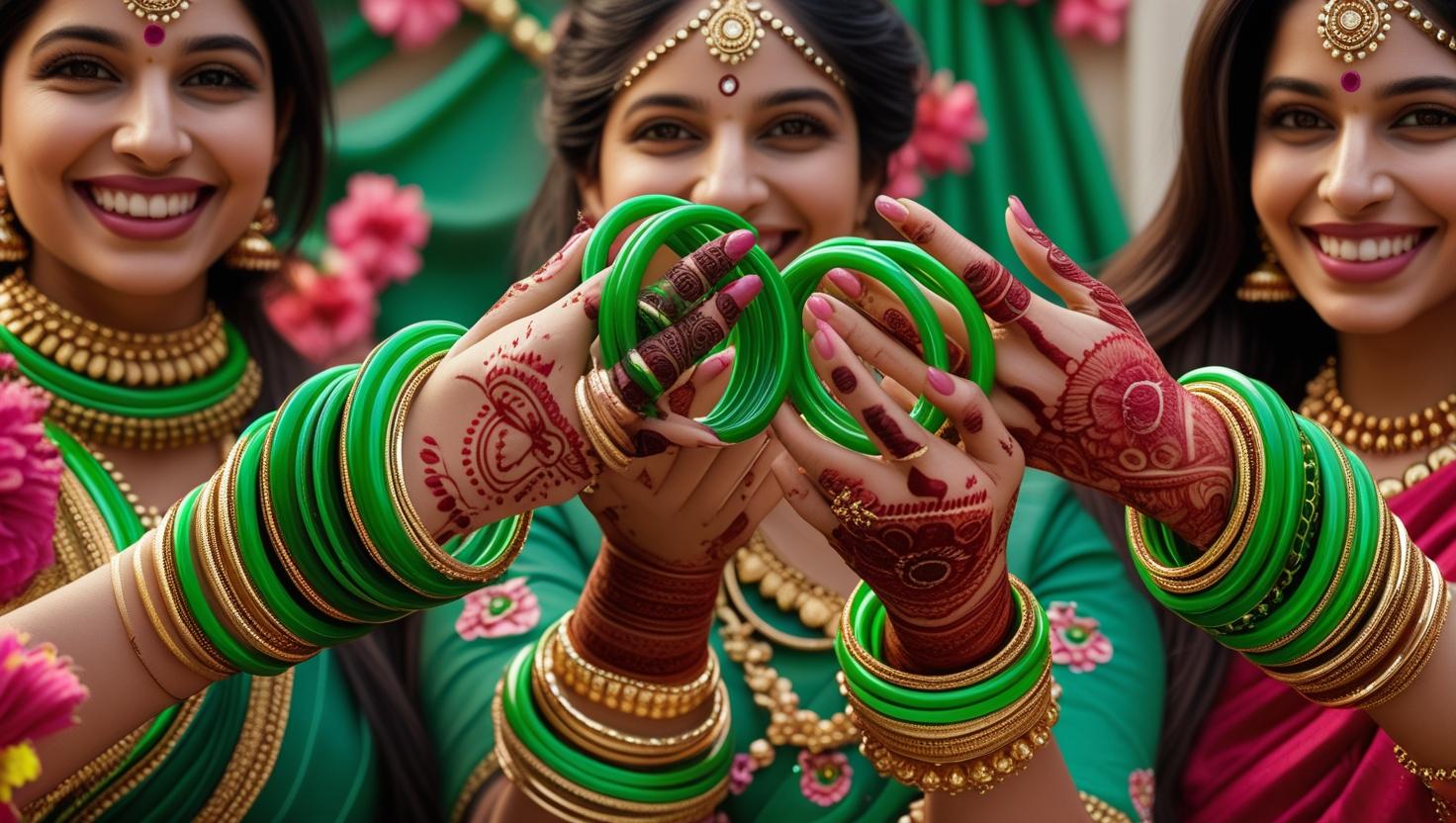
The month of Sarwan (or Shravan) holds immense religious and cultural significance in Hinduism. It is dedicated to Lord Shiva and devotees observe various rituals, fasts and traditions to seek his blessings. One of the most noticeable customs during this month is the wearing of women wear green bangles by women, particularly in North India.
But why do women wear green bangles specifically during Sawan? What is the spiritual, cultural and symbolic meaning behind this tradition? In this article we will explore the various reasons ranging from religious beliefs to astrological influences that explain this beautiful practice.
Table of Contents
1. Religious Significance: Connection to Lord Shiva and Goddess Parvati

a) Green as the Color of Nature and Fertility
Green symbolizes nature, growth and prosperity. Since Sawan is a monsoon month the earth is lush and green, representing fertility and new beginnings. Women wear green bangles to honor this natural abundance and to seek blessings for a prosperous life.
a) Green as the Color of Nature and Fertility
According to Hindu mythology, Goddess Parvati performed severe penance during Sawan to win Lord Shiva’s heart. Green is considered her favourite colour, representing devotion and marital bliss. Married women wear green bangles to emulate her devotion and pray for a happy married life.
c) Link to Lord Shiva’s Favourite Colour
While Lord Shiva is often associated with blue (Neelkanth) and white (ash-smeared body), green also holds significance as it represents the bilva leaves, which are dear to him. Offering bilva leaves to Shiva during Sawan is considered highly auspicious, and wearing green bangles aligns with this devotion.

2. Cultural and Traditional Beliefs
a) Symbol of Marital Happiness (Suhag)
In Indian culture, bangles are a symbol of a woman’s Husband (marital status). Married women wear green glass bangles as a sign of good fortune and longevity for their husbands. During Sawan this tradition gains extra importance as women observe fasts like 16 Mondays Fast (without eating) for their spouse’s well-being.
b) Protection from Evil and Negative Energies
Green is believed to ward off the evil eye and negative energies. Wearing green bangles during Sawan is thought to protect women from ill intentions and bring positivity into their lives.

c) Enhancing Beauty and Auspiciousness
In many Indian households, women dress in traditional green attire during Sawan. Green bangles complement their outfits, enhancing their beauty while adhering to the month’s spiritual theme.
3. Astrological and Health Benefits
a) Connection with the Planet Mercury (Budh)
In Vedic astrology, the colour green is linked to Mercury (Budh) the planet of intelligence, communication and prosperity. Wearing green during Sawan is believed to strengthen Mercury’s positive influence, bringing mental clarity and financial stability.
b) Balancing Body Energies
According to Ayurveda, colours have a therapeutic effect on the body. Green is associated with balance, harmony and healing. Wearing green bangles may help in calming the mind and maintaining emotional stability during the monsoon season which is often associated with mood fluctuations
c) Boosting Positive Vibrations
The sound of glass bangles is considered auspicious in Hinduism. The gentle clinking of green bangles is believed to attract positive vibrations and please the deities, especially during religious ceremonies in Sawan.

4. Regional Customs and Social Practices
a) Popular in North India (Especially Uttar Pradesh, Bihar, Rajasthan)
The tradition of wearing green bangles in Sawan is most prevalent in North India, where women participate in kanjak (kanya puja) and Shravan melas (fairs). These events often feature stalls selling green bangles making them an integral part of the festivities.
b) Sawan Teej and Festive Celebrations
During Hariyali Teej (which falls in Sawan), women dress in green saris, apply mehndi and wear green bangles as part of the celebrations. This festival honours the reunion of Lord Shiva and Goddess Parvati, reinforcing the colour’s importance.
c) Community Bonding and Sisterhood
Women often exchange green bangles as a gesture of love and solidarity. This practice strengthens social bonds and fosters a sense of unity among married women observing Sawan rituals together.
5. Mythological Stories Supporting the Tradition

a) The Legend of Shiva and Parvati’s Reunion
One popular legend state that when Goddess Parvati won Lord Shiva’s heart, she adorned herself in green. Since then, green has been considered sacred for marital happiness and women wear green bangles to invoke similar blessings.
b) The Story of the Neem Tree and Green Bangles
Another folklore suggests that a poor woman who could not afford jewellery offered neem leaves (green) to Goddess Parvati during Sawan. Pleased with her devotion the goddess blessed her with prosperity. Hence, green bangles became a symbol of devotion and divine blessings.
6. Modern Interpretations and Fashion Trends
a) Fusion of Tradition and Style
While the practice is deeply rooted in tradition, modern women blend green bangles with contemporary fashion. Designers create green lac bangles metallic green bracelets and stone-studded varieties making them trendy yet traditional.
b) Eco-Friendly and Sustainable Choices
With growing environmental awareness many women opt for eco-friendly green bangles made from recycled glass or natural dyes aligning spirituality with sustainability.