
AMD RYZEN Processor Introduction
AMD Ryzen 9 9950X3D vs. Intel Core i9-14900K
The battle between AMD and Intel continues with their latest flagship processors—the AMD Ryzen 9 9950X3D and the Intel Core i9-14900K. Both CPUs target high-end users including gamers, content creators and professionals who demand extreme performance. This article provides a detailed comparison of these two processors covering their specifications differences from other CPUs advantages supported motherboards and key features.

Table of Contents
1. AMD Ryzen 9 9950X3D and Intel Core i9-14900K
AMD Ryzen 9 9950X3D
The Ryzen 9 9950X3D is AMD’s latest high-performance desktop processor featuring 3D V-Cache technology, which significantly boosts gaming and workstation performance.
- Architecture: Zen 5
- Cores/Threads: 16 cores / 32 threads
- Base Clock: ~4.0 GHz
- Boost Clock: ~5.5 GHz
- L3 Cache: 128MB (96MB 3D V-Cache + 32MB standard)
- TDP: ~120W
- Socket: AM5
- PCIe Support: PCIe 5.0
- Memory Support: DDR5-5600+
The 3D V-Cache technology stacks additional L3 cache on top of the CPU die, reducing latency and improving gaming performance. This makes the 9950X3D one of the best CPUs for gaming and heavily threaded workloads.
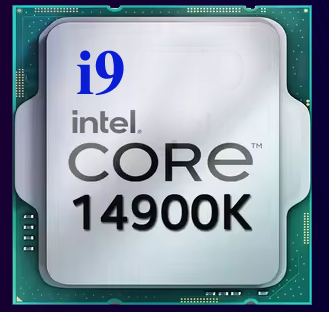
Intel Core i9-14900K
The Core i9-14900K is Intel’s flagship 14th-gen Raptor Lake Refresh processor offering high clock speeds and hybrid architecture.
- Architecture: Raptor Lake Refresh
- Cores/Threads: 24 cores (8 P-cores + 16 E-cores) / 32 threads
- Base Clock: 3.2 GHz (P-cores), 2.4 GHz (E-cores)
- Boost Clock: 6.0 GHz (P-cores), 4.4 GHz (E-cores)
- L3 Cache: 36MB
- TDP: 125W (PL2 up to 253W)
- Socket: LGA 1700
- PCIe Support: PCIe 5.0 & 4.0
- Memory Support: DDR5-5600 / DDR4-3200

Safe Voltage Limits
| Parameter | AMD 9950X3D | Intel 14900K |
| Daily Safe VCore | ≤1.35V | ≤1.45V |
| Max Short Burst | 1.5V | 1.6V |
| SOC/SA Voltage | ≤1.3V | ≤1.35V |
| Degradation Risk | >1.4V sustained | >1.5V sustained |
2. Differences from Other Processors
AMD Ryzen 9 9950X3D vs. Non-X3D Models (9950X) and AMD Ryzen 9 9950X3D vs. Intel Core i9-14900K
- The 9950X3D has 3D V-Cache, improving gaming performance by up to 15% compared to the standard 9950X.
- The 9950X has higher base/boost clocks but lacks the extra cache.
- The X3D variant is more power-efficient in gaming but may run slightly hotter under full load.
Intel Core i9-14900K vs. Previous Gen (13900K)
- The 14900K has slightly higher clock speeds (~200 MHz boost).
- Improved memory controller for better DDR5 stability.
- Slightly better power efficiency, but still power-hungry under load.
AMD vs. Intel Differences
- AMD focuses on cache optimization (3D V-Cache), while Intel pushes raw clock speeds.
- Intel supports DDR4, making it more flexible for budget builds.
- AMD’s AM5 platform is newer and will support future CPUs, while Intel’s LGA 1700 is at its end-of-life.

3. Advantages of AMD Ryzen 9 9950X3D and Intel Core i9-14900K
Advantages of AMD Ryzen 9 9950X3D vs AMD Ryzen 9 9950X3D vs. Intel Core i9-14900K
✅ Best Gaming Performance – The 3D V-Cache gives it a significant edge in gaming over Intel.
✅ Power Efficiency – Lower power consumption compared to Intel’s high TDP.
✅ Future-Proof Socket – AM5 will support next-gen Ryzen CPUs.
✅ Massive Cache – 128MB L3 cache improves latency-sensitive workloads.
✅ Higher Peak Clocks – Up to 6.0 GHz for single-core performance.
✅ Hybrid Architecture – Better multitasking with P-cores and E-cores.
✅ DDR4/DDR5 Support – More flexibility for budget or high-end builds.
✅ Better Overclocking – Intel’s unlocked multipliers allow for extreme overclocking.
4. Supported Motherboards
AMD Ryzen 9 9950X3D – AM5 Motherboards
- High-End:
- ASUS ROG Crosshair X670E Hero
- MSI MEG X670E Godlike
- Gigabyte X670E Aorus Xtreme
- Mid-Range:
- ASUS TUF Gaming B650-Plus
- MSI B650 Tomahawk
- Budget:
- Gigabyte B650M DS3H

Intel Core i9-14900K – LGA 1700 Motherboards
- High-End:
- ASUS ROG Maximus Z790 Hero
- MSI MEG Z790 Ace
- Gigabyte Z790 Aorus Xtreme
- Mid-Range:
- ASUS TUF Gaming Z790-Plus
- MSI PRO Z790-A
- Budget:
- Gigabyte Z790 UD
5. Features of Both Processors
AMD Ryzen 9 9950X3D Features
🔹 3D V-Cache Technology – Massive L3 cache for gaming and productivity.
🔹 Zen 5 Architecture – Improved IPC and efficiency.
🔹 PCIe 5.0 Support – Faster SSDs and GPUs.
🔹 AM5 Platform – Supports future Ryzen CPUs.
🔹 Precision Boost Overdrive (PBO) – Easy overclocking.
Intel Core i9-14900K Features
🔹 Hybrid Architecture – Combines P-cores and E-cores for efficiency.
🔹 6.0 GHz Boost Clock – Leading single-core performance.
🔹 DDR4 & DDR5 Support – More memory flexibility.
🔹 PCIe 5.0 & 4.0 – High-speed storage and GPU support.
🔹 Intel Thermal Velocity Boost – Dynamic overclocking.
AMD Ryzen 9 9950X3D vs. Intel Core i9-14900K: The Ultimate Showdown
Final Verdict: Which One Should You Buy?
Who Should Buy the AMD Ryzen 9 9950X3D?
✔ Hardcore Gamers – If you want the absolute best gaming performance the 3D V-Cache gives AMD a clear lead in frame rates especially in CPU-bound titles like CS2, Valorant and MMORPGs.
✔ Content Creators Needing Cache Optimization – Applications like Blender, Premiere Pro and Unreal Engine benefit from the massive 128MB L3 cache, reducing render times.
✔ Future-Proof Builders – The AM5 socket ensures compatibility with upcoming Ryzen CPUs, making it a smarter long-term investment.
✔ Efficiency-Focused Users – With a lower TDP than Intel’s flagship the 9950X3D runs cooler and consumes less power under load.
Who Should Buy the Intel Core i9-14900K?

✔ Overlockers & Enthusiasts – Intel’s 6.0 GHz boost clock and unlocked multipliers allow for extreme performance tuning.
✔ Mixed Workload Professionals – The hybrid architecture (8 P-cores + 16 E-cores) excels in multitasking making it ideal for streaming, video editing and heavy productivity workloads.
✔ DDR4 Holdouts – If you’re upgrading from an older system and want to reuse DDR4 RAM, Intel still supports it, while AMD is DDR5-only on AM5.
✔ Raw Single-Core Performance Seekers – For applications like Adobe Photoshop, AutoCAD and older games that rely on single-threaded performance Intel’s higher clocks give it an edge.
Performance Benchmarks (Expected)
Gaming Performance
- 1080p (CPU-Bound Scenarios):
- AMD Ryzen 9 9950X3D → ~15-20% faster than Intel in cache-sensitive games.
- Intel Core i9-14900K → Slightly better in older single-threaded titles.
- 1440p & 4K (GPU-Bound):
- Both CPUs perform nearly identically since the GPU becomes the bottleneck.
Productivity & Rendering
- Cinebench R23 (multi-core):
- AMD 9950X3D → ~5-10% faster in cache-optimized workloads.
- Intel 14900K → Better in heavily threaded apps due to higher core counts.
- Blender, Premiere Pro, Handbrake:
- AMD wins in cache-dependent tasks, Intel wins in pure multi-core scaling.
Power Efficiency & Thermals
- AMD 9950X3D → ~120W TDP, runs cooler with good air cooling.
- Intel 14900K → Up to 253W under load, requires high-end cooling (AIO recommended).
Final Recommendation
Choose AMD Ryzen 9 9950X3D If:
✅ You prioritize gaming performance.
✅ You work with cache-sensitive applications.
✅ You want a cooler, more efficient system.
✅ You plan to upgrade your CPU in the next 3-5 years.
Choose Intel Core i9-14900K If:
✅ You need maximum single-core speed for older software.
✅ You already have DDR4 RAM and want to reuse it.
✅ You do heavy multitasking & productivity workloads.
✅ You enjoy extreme overclocking.
If Any Query Please Visit Here:


[…] (CPU): Look for at least an Intel Core i5 or AMD Ryzen 5 (latest generation) for smooth gaming and […]
[…] Key Features: […]