
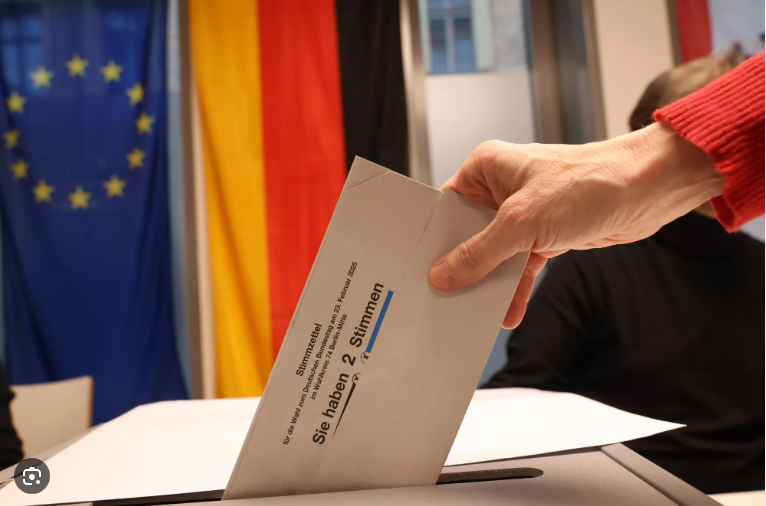
In a pivotal shift of circumstances Germany’s political arena has experienced a significant
transformation following the federal elections conducted on February 23, 2025. Friedrich
Merz the head of the Christian Democratic Union (CDU) has proclaimed triumph placing his party in a leading position within German politics. Simultaneously incumbent Chancellor
Olaf Scholz of the Social Democratic Party (SPD) has admitted to defeat acknowledging
the voter’s desire for change.
CDU’s Revival Under Merz
The CDU alongside its Bavarian counterpart the Christian Social Union (CSU) garnered
around 29% of the vote based on exit polls from the public broadcaster ARD. This signifies a notable revival for the conservative coalition which had encountered difficulties in prior
elections. Speaking to supporters at the CDU headquarters in Berlin Merz expressed
appreciation for the renewed confidence shown in his leadership.
We have triumphed in the federal elections of 2025, Merz asserted underscoring the
mandate received from the voters. He thanked Markus Solder the head of the CSU
emphasizing the strong collaboration between the two parties. Merz also recognized
the considerable task ahead, stating. understand the responsibility and the scale of the challenges we confront. We will tackle them with utmost respect and resolve

Merz emphasized the necessity of quickly establishing an effective government with a
solid parliamentary majority. The world won’t pause for us he remarked referencing
the urgent domestic and global issues that Germany must confront. He urged for immediate
coalition talks to guarantee Germany’s preparedness for upcoming obstacles.
SPD’s Unprecedented Decline and Scholz’s Acknowledgment
The SPD witnessed a dramatic drop garnering merely 16% of the votes a record low for
the party. Chancellor Scholz during his concession address characterized the result as
a harsh outcome and a definitive defeat. He offered his congratulations to Merz and the
CDU/CSU for their electoral achievement.
Scholz also sounded a warning regarding possible coalitions, urging Merz to adhere to democratic
values by avoiding partnerships with the ferrite Alternative for Germany (AfD).
It is crucial that we uphold a distinct line against extremism Scholz insisted, highlighting the SPD’s dedication to a democratic and inclusive Germany.

AfD’s Rise and Its Consequences
Merz’s campaign was primarily centered on reinvigorating Germany’s economy promoting
tax reforms easing bureaucratic obstacles and reevaluating the country’s energy policy.
He has been an outspoken critic of the previous government’s strategy particularly regarding the nuclear energy phase out and the dependence on renewable sources without adequate
infrastructure.
In terms of social policies Merz has taken a more conservative approach, particularly
on immigration issues. He has advocated for tighter border controls and a reassessment
of asylum policies stances that have struck a chord with a portion of the electorate
concerned about integration and security. However, these perspectives may create
complications in coalition negotiations especially with the Greens who support
more liberal immigration policies and a firm commitment to environmental sustainability.
International Reactions and Implications
The results of the election have prompted responses from global observers and allies.

Germany’s position within the European Union and its approach to global issues like climate change trade and security are crucial. Merz has expressed a wish for Germany to establish a more pronounced role within the EU pushing for policies that reconcile national priorities
with collective European objectives.
Nevertheless the ascent of the AfD has sparked worries about a potential turn toward
nationalism and Euroscepticism in German politics. Although the AfD remains outside
of prospective governing coalitions its heightened presence in the Bundestag could
shape legislative discussions and the wider political narrative.


