
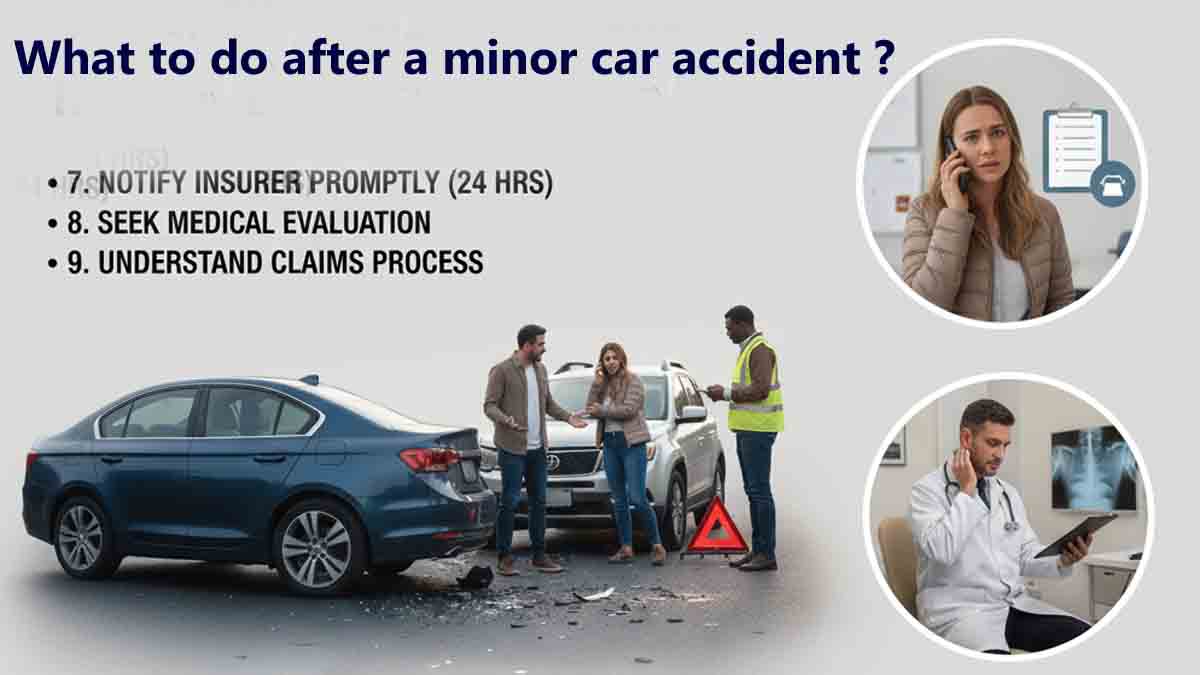
You’re driving along, maybe humming to a song or thinking about your grocery list, when it happens. A sudden jolt the unmistakable sound of crunching plastic and your heart drops into your stomach. What to do after a minor car accident? You’ve been rear-ended. Or perhaps you’re the one who did the rear-ending.
In that moment, adrenaline and confusion take over. what to do after a minor rear-end collision a minor rear-end collision is rarely a catastrophic event, but how you handle the immediate aftermath can be the difference between a smoothly resolved inconvenience and a months-long headache of insurance disputes and hidden costs.
This guide is your roadmap. We’ll walk you through every critical step, from the first few seconds after the impact to the final resolution of your claim. Bookmark this page, because knowing what to do before it happens is your greatest asset.
Table of Contents
Phase 1: At the Scene – Securing Safety and Evidence, what to do after a minor rear-end collision ?
Your actions in the first 15-30 minutes are crucial. Stay calm take a deep breath and follow these steps methodically.

1. Stay Put and Secure the Scene
First and foremost, never drive away from the scene of an accident no matter how minor it seems. This is illegal and can be considered a hit-and-run.
- Move Vehicles to a Safe Location (If Possible): Check for oncoming traffic. If the vehicles are drivable and the collision occurred in a travel lane turn on your hazard lights and carefully move to the shoulder a side street or a parking lot. This prevents secondary collisions and keeps traffic flowing.
- If You Cannot Move the Vehicle: If the car is inoperable, leave your hazard lights on and set up road flares or reflective triangles if you have them.
2. Check for Injuries & Call 911 if Necessary What to do after a minor car accident ?
Adrenaline can mask pain. Before you worry about the car, check on the people.
- Check Yourself: Do a quick self-assessment. Are you feeling any pain, dizziness or discomfort?
- Check Your Passengers: Ask everyone in your vehicle if they are okay.
- Check the Other Driver and Their Passengers: Politely ask, “Is everyone alright?”
- When to Call 911: Always call the police if there are any injuries, however slight. You should also call if the other driver is aggressive, uncooperative or appears to be under the influence. A police report creates an official, third-party record of the event, which is invaluable for insurance purposes.
3. Exchange Information – The Essentials
This is a non-negotiable step. You need to collect and provide specific information. Use your smartphone’s notes app or a pen and paper.
Information to COLLECT from the Other Driver:
- Full Name with Contact Information: Phone number and email address.
- Driver’s License Number & State: Take a picture of their license if possible.
- Insurance Information: Company name, policy number and phone number. Snap a photo of their insurance card.
- Vehicle Information: Make, model, year, colour and license plate number.
Information to PROVIDE to the Other Driver:
Your own full name, insurance details and driver’s license number.
4. Document the Scene Like a Pro
In the age of smartphones you have a powerful evidence-gathering tool in your pocket. Be thorough.
- Photograph All Vehicles: Take wide-angle shots showing the position of both cars relative to the road and any traffic signals or signs. Then, get close-up photos of the damage to both vehicles from multiple angles.
- Capture the Context: Photograph skid marks on the road debris from the collision and any relevant environmental factors (e.g., an obscured stop signs poor weather conditions).
- Record a Video: A short video panning around the scene can provide excellent context, narrating what you see.
- Note the Details: Write down the date, time, exact location (cross streets, address), and weather and road conditions.
5. Speak Carefully – What to Say (and Not Say)
Interactions at the scene can be tense. It’s vital to be polite but guarded.
DO: State the facts simply. “You hit the back of my car when I was stopped.”
DO NOT: Never admit fault or apologize. Avoid saying things like “I’m so sorry, I didn’t see you!” or “It was my fault.” Even a polite “I’m sorry” can be misconstrued as an admission of liability. The determination of fault is a complex process best left to the insurance companies based on the evidence and local traffic laws. In most cases the driver who rear ends the other vehicle is found at fault, but there can be exceptions.
Limit Conversation: Stick to the necessary exchange of information. Do not engage in debates about who is to blame.

6. Talk to Witnesses
If there were people who saw the accident, they can provide unbiased accounts.
Politely Approach Them: Ask, “Excuse me, did you see what happened?”
Get Their Contact Information: If they are willing, get their full name and phone number. This can be crucial if the other driver later changes their story.
Phase 2: After Leaving the Scene – The Follow-Through
The immediate crisis is over, but your responsibilities are not. What you do in the hours and days that follow is just as important.
7. Notify Your Insurance Company – Promptly
Many people hesitate, thinking their rates will go up. However, failing to report an accident can be a violation of your policy and could give the insurance company grounds to deny coverage later.
- When to Call: Report the accident to your insurance company as soon as possible, ideally within 24 hours.
- What to Tell Them: Provide a clear, factual account of what happened. Submit all the photos and documentation you collected. Even if you were not at fault, your insurance company can act as an advocate on your behalf, especially if the other driver’s insurance is unresponsive.
8. Seek a Medical Evaluation – Even If You Feel Fine
This is one of the most overlooked steps. The effects of whiplash and other soft-tissue injuries may not manifest until 24-48 hours after the collision.
- Listen to Your Body: Be vigilant for symptoms like neck stiffness, headaches, back pain or confusion.
- See a doctor: Visit your primary care physician or an urgent care clinic for a check-up. Tell them you were in a car accident. This creates a medical record that directly links your injuries to the collision which is essential if you need to make a medical claim later.
9. Understand the Claims Process
You have two main paths for getting your car repaired and medical bills paid:
Filing Through the Other Driver’s Insurance (Third-Party Claim): If the other driver is clearly at fault, you can file a claim directly with their insurance company. They will investigate and if they accept liability, pay for your vehicle repairs and any medical expenses (up to their policy limits). You will likely need to pay your deductible upfront, but it should be reimbursed once liability is confirmed.
- Filing Through Your Own Insurance (First-Party Claim): You might choose this option if the other driver is uninsured, underinsured or if their insurance company is disputing liability. You will be subject to your policy’s collision coverage deductible. Your insurance company may then attempt to recover the costs (including your deductible) from the other driver’s insurer in a process called subrogation.
Once the claim is approved you can get repair estimates.

10. Get Your Vehicle Repaired
- Choose a Reputable Shop: Your insurance company may recommend a network shop, but you have the legal right to choose any repair facility you trust.
- Review the Estimate: Ensure the estimate covers all visible and potential hidden damage. A good body shop will work with the insurance adjuster to ensure everything is covered.
Phase 3: Protecting Yourself – Common Pitfalls and Legal Considerations
Sometimes, the at-fault driver may offer to pay for the damages in cash to avoid involving insurance. Be extremely cautious.
11. Beware of the “Quick Cash” Offer
The Risks: The cost of repairs is almost always more than it initially appears. What looks like a dented bumper can hide damaged sensors, brackets and reinforcement bars. You also forfeit any recourse for potential injury claims that arise later.
The Verdict: It is almost always safer to go through the official insurance process.
12. Know When to Hire an Attorney
For most minor fender-benders with clear liability and no injuries you may not need a lawyer. However, consider consulting with a personal injury attorney if:
There is any dispute over who is at fault.
- You or your passengers have sustained significant injuries.
- The insurance company denies your claim or offers a settlement that seems unfairly low.
- The other driver is uninsured or underinsured.
13. The Hidden Damage: Diminished Value
After your car is repaired, it now has an accident on its record. This can significantly reduce its resale value this is called “Diminished Value.”
- What it is: The difference between your car’s pre-accident value and its value after being repaired.
- How to Claim It: You may be able to file a diminished value claim against the at-fault driver’s insurance company. This is a more advanced claim and often requires an independent appraisal but it can be worth thousands of dollars.


so helpful news for me.